Korean Beef Bibimbap Bowl Recipe
Introduction
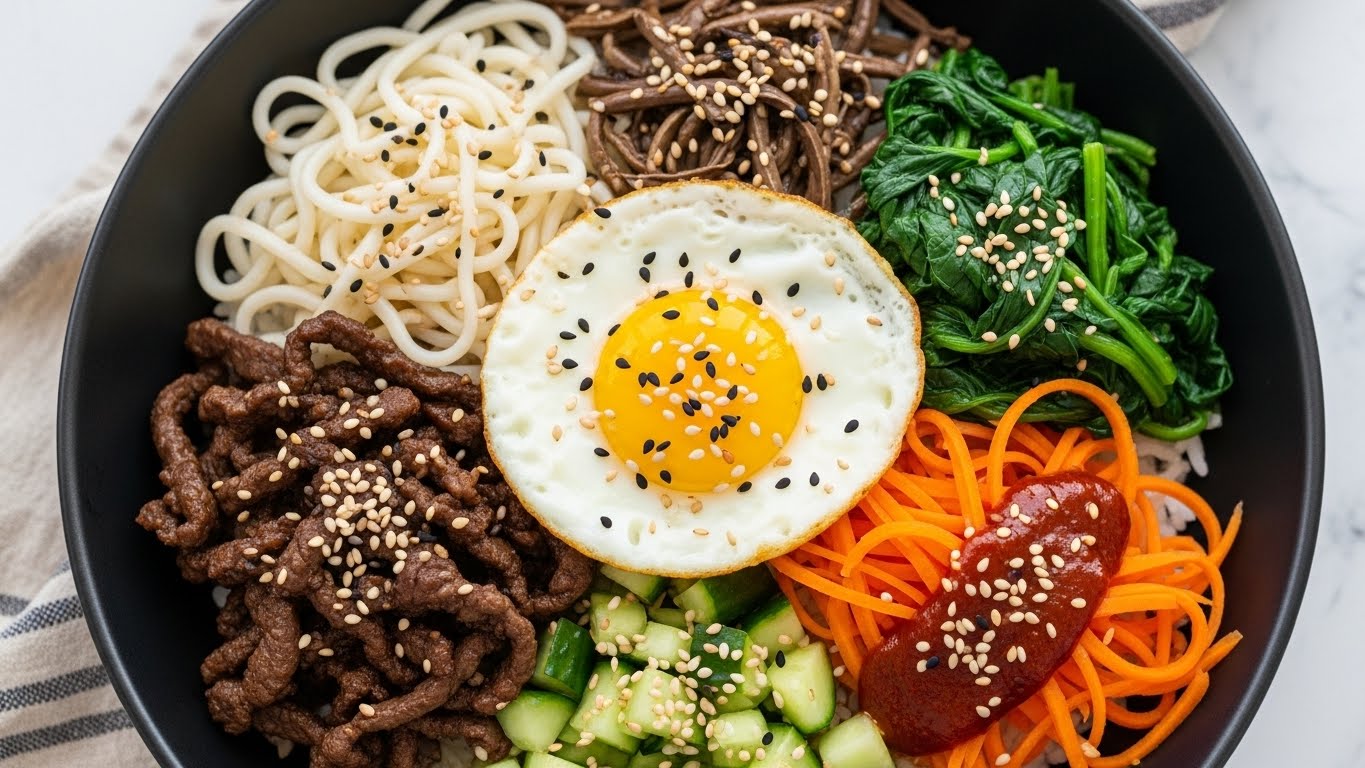
Korean Beef Bibimbap Bowl is a vibrant and satisfying meal that combines savory ground beef, fresh vegetables, and a perfectly cooked fried egg atop steamed rice. This dish is full of flavor and texture, making it a delightful option for a quick weeknight dinner or a hearty lunch.
Ingredients
- 1 lb lean ground beef
- 2 cups short-grain white rice (cooked)
- 1 cup carrots (julienned)
- 1 cup spinach (fresh)
- 1 cup zucchini (sliced)
- 1 cup bean sprouts
- 3 tbsp gochujang sauce (adjust for spice level)
- 1 tbsp sesame oil
- 2 tbsp low-sodium soy sauce
- 4 eggs
Instructions
- Step 1: Cook the rice according to package instructions; set aside.
- Step 2: In a skillet, brown the ground beef over medium-high heat for 5-7 minutes, then drain excess fat.
- Step 3: Stir in gochujang, soy sauce, and sesame oil into the beef; simmer on low heat for 5 minutes to blend flavors.
- Step 4: In a separate pan, sauté the carrots, spinach, zucchini, and bean sprouts in sesame oil over medium heat until tender-crisp, about 7 minutes.
- Step 5: Fry the eggs sunny-side up until the whites are set but yolks remain runny, approximately 3 minutes.
- Step 6: Assemble the bowls by layering cooked rice, the beef mixture, and the sautéed vegetables. Top each with a fried egg and drizzle with extra gochujang sauce if desired.
Tips & Variations
- For a vegetarian version, substitute ground beef with crumbled tofu or cooked mushrooms.
- Use brown rice for a healthier whole grain option.
- Add kimchi on the side for an extra burst of flavor and texture.
- Adjust gochujang amount to control the dish’s spiciness according to your taste.
Storage
Store any leftovers in an airtight container in the refrigerator for up to 3 days. When reheating, warm the rice and beef separately in the microwave or on the stovetop to maintain texture. Add a freshly cooked egg on top for the best experience.
How to Serve
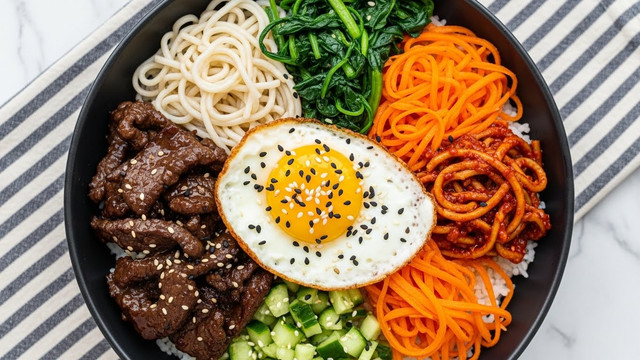
Serve this delicious recipe with your favorite sides.
FAQs
Can I use other meats instead of ground beef?
Yes, ground pork, chicken, or turkey can be used as substitutes depending on your preference. Cook them thoroughly following the same instructions.
How spicy is gochujang sauce?
Gochujang has a balanced sweet and spicy flavor with moderate heat. You can adjust the quantity to suit your taste, or replace it with a mild chili paste if preferred.
PrintKorean Beef Bibimbap Bowl Recipe
A vibrant and flavorful Korean Beef Bibimbap Bowl featuring tender ground beef cooked in spicy gochujang sauce, served over fluffy short-grain rice with sautéed vegetables and topped with a perfectly fried sunny-side-up egg. This dish offers a balanced combination of savory, spicy, and fresh flavors, ideal for a satisfying and wholesome meal.
- Prep Time: 15 minutes
- Cook Time: 20 minutes
- Total Time: 35 minutes
- Yield: 4 servings 1x
- Category: Main Course
- Method: Stovetop
- Cuisine: Korean
- Diet: Low Fat
Ingredients
Protein and Sauce
- 1 lb lean ground beef
- 3 tbsp gochujang sauce (adjust for spice level)
- 2 tbsp low-sodium soy sauce
- 1 tbsp sesame oil
- 4 eggs
Vegetables
- 1 cup carrots (julienned)
- 1 cup spinach (fresh)
- 1 cup zucchini (sliced)
- 1 cup bean sprouts
Carbohydrate
- 2 cups short-grain white rice (cooked)
Instructions
- Cook the rice: Rinse and cook the short-grain white rice according to package instructions. Once cooked, set aside and keep warm.
- Brown the beef: Heat a skillet over medium-high heat. Add the lean ground beef and cook, stirring occasionally, until browned and fully cooked, about 5-7 minutes. Drain any excess fat from the skillet.
- Flavor the beef: Stir in the gochujang sauce, low-sodium soy sauce, and sesame oil into the browned beef. Reduce heat to low and simmer the mixture for 5 minutes, allowing the flavors to meld.
- Sauté the vegetables: In a separate pan, heat a small amount of sesame oil over medium heat. Add the carrots, spinach, zucchini, and bean sprouts. Cook, stirring occasionally, until the vegetables are tender-crisp, approximately 7 minutes.
- Fry the eggs: In a lightly oiled skillet over medium heat, fry the eggs sunny-side up until the whites are fully set but the yolks remain runny, about 3 minutes.
- Assemble the bowls: Divide the cooked rice among bowls. Layer with the spiced ground beef mixture, followed by the sautéed vegetables. Top each bowl with a sunny-side-up egg. Drizzle additional gochujang sauce over the top if desired before serving.
Notes
- You can substitute white rice with brown rice or quinoa for a healthier option.
- Adjust the amount of gochujang to control the spice level according to your preference.
- For added crunch, garnish the bowl with toasted sesame seeds or sliced green onions.
- To keep the yolk runny, cook eggs at a gentle heat to avoid overcooking.
- This dish can be customized with other vegetables like mushrooms or bell peppers.
Keywords: Korean beef bibimbap, Korean rice bowl, ground beef bibimbap, spicy beef rice bowl, Korean cuisine, bibimbap recipe