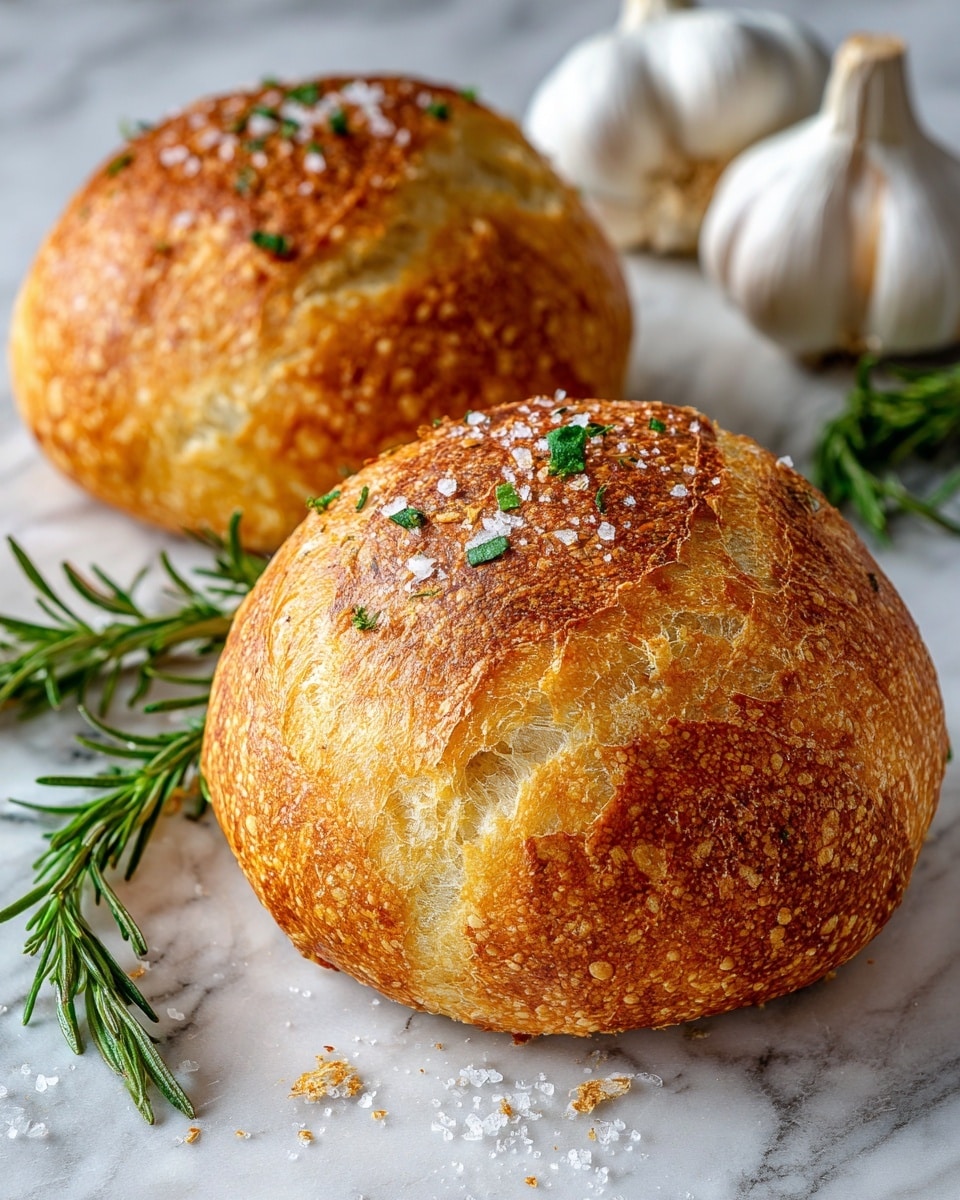
Homemade Garlic Rosemary Bread Recipe
Introduction
Homemade Garlic Rosemary Bread is a fragrant and flavorful loaf perfect for any meal. With crispy crust and soft, aromatic interior, this bread brings a rustic touch to your table. It’s easier to make than you think and perfect for sharing.
Ingredients
- 3½ cups (420g) all-purpose flour
- 1½ cups (360ml) warm water
- 2¼ tsp (7g) active dry yeast
- 1½ tsp (9g) salt
- 2 tbsp (30ml) olive oil
- 2 tbsp fresh rosemary, chopped
- 4 cloves garlic, minced
Instructions
- Step 1: Activate the yeast by combining warm water and yeast in a small bowl. Let sit for 5 minutes until the mixture becomes foamy.
- Step 2: In a large bowl, mix the flour and salt. Add the yeast mixture, olive oil, minced garlic, and chopped rosemary. Stir until a shaggy dough forms.
- Step 3: Turn the dough onto a floured surface and knead for about 10 minutes until it becomes smooth and elastic.
- Step 4: Place the dough in a greased bowl, cover it with a towel, and let it rise in a warm spot for 1 hour or until it doubles in size.
- Step 5: Punch down the dough to release air and shape it into a round loaf. Place the loaf on a baking sheet or pizza stone.
- Step 6: Cover the loaf again with a towel and let it rise for another 30 minutes. Meanwhile, preheat your oven to 450°F (230°C).
- Step 7: Score the top of the loaf with a sharp knife to allow steam to escape. Bake for 30-35 minutes until the crust is golden brown and the loaf sounds hollow when tapped.
- Step 8: Let the bread cool on a wire rack for at least 15 minutes before slicing to finish the cooking process and set the crumb.
Tips & Variations
- For a deeper rosemary flavor, gently bruise the rosemary leaves before adding them to the dough.
- Try adding a tablespoon of honey for a subtle sweetness that balances the garlic and rosemary.
- Use a mix of all-purpose and bread flour for extra chewiness in the crumb.
- Brush the loaf with olive oil before baking for a glossier crust.
Storage
Store the bread in a paper bag or breadbox at room temperature for up to 2 days to maintain crustiness. For longer storage, wrap it tightly in plastic wrap and freeze for up to 2 months. Reheat in the oven at 350°F (175°C) for 10-15 minutes to refresh the crust.
How to Serve
Serve this delicious recipe with your favorite sides.
FAQs
Can I use dried rosemary instead of fresh?
Yes, you can substitute dried rosemary, but use about one-third of the amount since dried herbs are more concentrated. So, 2 teaspoons of dried rosemary would work well.
What if I don’t have a pizza stone?
You can bake the bread on a baking sheet lined with parchment paper. Preheating the baking sheet in the oven can help simulate the effect of a pizza stone for a crispier crust.
PrintHomemade Garlic Rosemary Bread Recipe

This Homemade Garlic Rosemary Bread recipe is a fragrant, rustic loaf perfect for pairing with soups, salads, or enjoying on its own. Made from scratch with simple ingredients like fresh rosemary and garlic, this bread features a crisp golden crust and a soft, flavorful interior. The slow rising and baking process brings out the best in texture and flavor, making it a rewarding baking experience for any home cook.
- Prep Time: 20 minutes
- Cook Time: 35 minutes
- Total Time: 1 hour 55 minutes
- Yield: 12 servings 1x
- Category: Bread
- Method: Baking
- Cuisine: American
Ingredients
Dry Ingredients
- 3½ cups (420g) all-purpose flour
- 2¼ tsp (7g) active dry yeast
- 1½ tsp (9g) salt
Wet Ingredients & Flavorings
- 1½ cups (360ml) warm water
- 2 tbsp (30ml) olive oil
- 2 tbsp fresh rosemary, chopped
- 4 cloves garlic, minced
Instructions
- Activate the yeast: Combine warm water and yeast in a small bowl. Let sit for 5 minutes until foamy, which indicates the yeast is active and ready to use.
- Mix the dough: In a large bowl, mix the flour and salt. Add the yeast mixture, olive oil, minced garlic, and chopped rosemary. Stir until a shaggy dough forms.
- Knead the dough: Turn the dough out onto a floured surface and knead it for about 10 minutes until it becomes smooth and elastic, developing gluten needed for structure.
- First rise: Place the kneaded dough in a greased bowl and cover it with a clean towel. Let it rise in a warm spot for about 1 hour or until it doubles in size.
- Shape the dough: Punch down the risen dough to release air, then shape it into a round loaf. Place the loaf on a baking sheet or pizza stone for baking.
- Second rise: Cover the loaf with a towel and allow it to rise for 30 minutes. Meanwhile, preheat your oven to 450°F (230°C).
- Score and bake: Use a sharp knife to score the top of the loaf which helps with oven spring during baking. Bake for 30-35 minutes until the crust is golden brown and the loaf sounds hollow when tapped.
- Cool: Remove the bread from the oven and let it cool on a wire rack for at least 15 minutes before slicing to ensure the crumb sets properly.
Notes
- Use warm water around 105°F (40°C) to properly activate the yeast without killing it.
- Kneading time is essential for gluten development; insufficient kneading can result in dense bread.
- Ensure the dough doubles in size during rises to achieve a light, airy texture.
- Scoring the loaf controls expansion and creates an attractive crust pattern.
- Cooling on a wire rack prevents soggy bottoms by allowing steam to escape.
- Use a pizza stone if available for a crispier crust; otherwise, a baking sheet works well.
Keywords: Homemade bread, Garlic bread, Rosemary bread, Artisan bread, Easy bread recipe, Baking bread from scratch