
Homemade Kimchi Recipe
Introduction
Homemade kimchi is a traditional Korean fermented cabbage dish full of bold, tangy flavors and a spicy kick. Making it yourself allows you to customize the heat and tang to suit your taste while enjoying the benefits of natural fermentation.
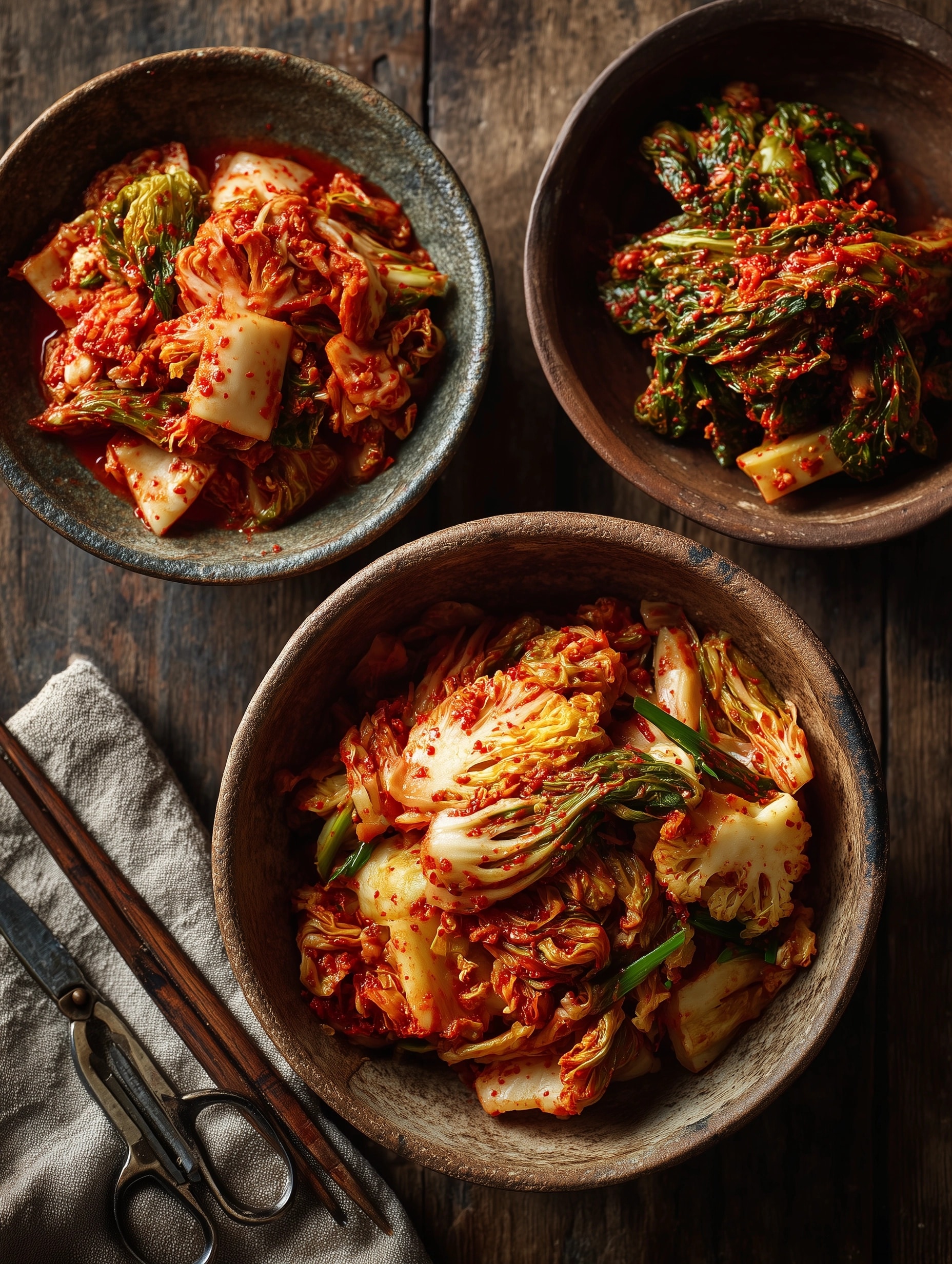
Ingredients
- 40 g finely ground sea salt
- 1.2 kg Chinese cabbage, cut into 5 x 5 cm squares
- 370 g spring onion, cut into 5 cm pieces
- 49 g fresh ginger (about a 9 cm piece), finely grated
- 10 cloves garlic, crushed or minced
- 30 g dried Korean chili powder (kochukaru), or substitute with other dried chili powder
- 1.5 tbsp granulated sugar
Instructions
- Step 1: Dissolve 30 g of salt in 2 liters of cold water in a jug.
- Step 2: Place the cabbage in a non-reactive container (glass, porcelain, or earthenware) of at least 2.5 liters. Pour the salted water over the cabbage until fully submerged. Cover with a plate and leave at room temperature for about 12 hours to start fermenting. You’ll notice bubbles and a slight sour smell developing.
- Step 3: Drain the cabbage, reserving the pickling liquid (brine). In a large bowl, combine the cabbage with spring onion, grated ginger, garlic, chili powder, sugar, and the remaining 10 g of salt. Mix thoroughly.
- Step 4: Transfer the mixture into a sterilized 2-liter jar. Pour the reserved brine back over the cabbage to keep it submerged.
- Step 5: Place some of the remaining brine into a plastic bag, seal it tightly, and set it atop the cabbage in the jar to ensure it stays submerged.
- Step 6: Keep the jar in a room where the temperature does not exceed 20°C to ferment. This process usually takes 4 to 6 days depending on your taste preference.
- Step 7: Once the fermentation reaches your desired level, remove the bag, seal the jar with a lid, and store it in the refrigerator.
Tips & Variations
- Use Korean chili powder (kochukaru) for an authentic flavor, but feel free to adjust the heat by substituting with milder or hotter chili powders.
- The fermentation time can be shortened or extended depending on the ambient temperature and your taste preference. Taste daily after 3 days.
- Add shredded carrot or radish for extra crunch and color.
Storage
Store kimchi in a sealed jar in the refrigerator once fermentation is complete. It will keep well for up to 3 months. The flavor will continue to develop and become more sour over time. Always keep the cabbage submerged to prevent mold.
How to Serve
Serve this delicious recipe with your favorite sides.
FAQs
How do I know when kimchi is ready?
You’ll see bubbles in the brine and notice a pleasantly sour, tangy aroma. Taste it after about 4 days; if it’s too mild, let it ferment a few more days.
Can I use regular cabbage instead of Chinese cabbage?
Yes, regular cabbage can be used, but it may have a different texture and flavor. Chinese cabbage is traditional and offers a sweeter, crisper bite.
PrintHomemade Kimchi Recipe

This homemade kimchi recipe teaches you how to ferment Chinese cabbage with traditional Korean seasonings to create a tangy, spicy, and deeply flavorful side dish. Using simple ingredients like salt, ginger, garlic, spring onions, and Korean chili powder, the recipe guides you through the fermentation process that transforms the vegetables into a probiotic-rich delicacy perfect for complementing a variety of meals.
- Prep Time: 20 minutes
- Cook Time: 0 minutes
- Total Time: 12 hours 20 minutes (including fermentation starter) + 4-6 days fermentation
- Yield: Approximately 2 liters of kimchi 1x
- Category: Fermented
- Method: No-Cook
- Cuisine: Korean
- Diet: Vegetarian
Ingredients
Brining Solution
- 30 g finely ground sea salt
- 2 liters cold water
Vegetables and Seasoning
- 1.20 kg Chinese cabbage, cut into 5 x 5 cm squares
- 370 g spring onion, cut into 5 cm pieces
- 49 g fresh ginger (approximately a 9 cm piece), finely grated
- 10 cloves garlic, crushed or minced
- 30 g Korean dried chili powder (kochukaru), can be replaced with other dried chili powder
- 1.5 tbsp granulated sugar
- 40 g finely ground sea salt (including the 30 g used in brining)
Instructions
- Prepare the Brine: Dissolve 30 g of sea salt in 2 liters of cold water in a large jug to create the brining solution.
- Brine the Cabbage: Place the cut Chinese cabbage into a non-reactive container, such as glass, porcelain, or earthenware, large enough to hold at least 2.5 liters. Pour the salted water over the cabbage ensuring it is fully submerged. Cover the container with a plate and leave at room temperature (below 20°C) for about 12 hours to start the fermentation process. You should notice bubbles forming and a slight sour smell as the cabbage ferments.
- Drain and Save Brine: After fermentation, drain the cabbage but reserve the brining liquid (pickle).
- Mix the Ingredients: In a large bowl, combine the drained cabbage with the spring onion, grated ginger, minced garlic, Korean chili powder, granulated sugar, and the remaining salt (10 g). Stir thoroughly to ensure the seasoning is evenly distributed.
- Pack into Jar: Transfer the seasoned cabbage mixture into a sterilized 2-liter jar. Pour some of the reserved brine over the top to keep the cabbage submerged, preventing exposure to air.
- Submerge the Cabbage: Place some of the remaining marinade into a sealed plastic bag and press it gently on top of the cabbage inside the jar to hold everything down and keep it fully submerged in brine.
- Ferment: Store the jar in a room that does not exceed 20°C for 4 to 6 days, allowing the kimchi to ferment to your preferred level of tanginess and sourness.
- Store: After fermentation, remove the plastic bag, seal the jar with a lid, and place it in the refrigerator. The kimchi will continue to develop flavor and is best consumed within 3 months.
Notes
- Ensure the cabbage is fully submerged in the brine to prevent spoilage and mold growth.
- The fermentation time can be adjusted depending on your taste preference; longer fermentation will result in stronger sourness.
- Use non-reactive containers (glass, porcelain, or earthenware) to avoid metallic tastes or chemical reactions during fermentation.
- If Korean chili powder (kochukaru) is unavailable, substitute with other dried chili powders, adjusting the quantity according to heat preference.
- Store kimchi in the refrigerator after fermentation to slow down further fermentation and extend shelf life.
Keywords: Homemade kimchi, fermented cabbage, Korean side dish, fermented vegetables, kimchi recipe, probiotic food